

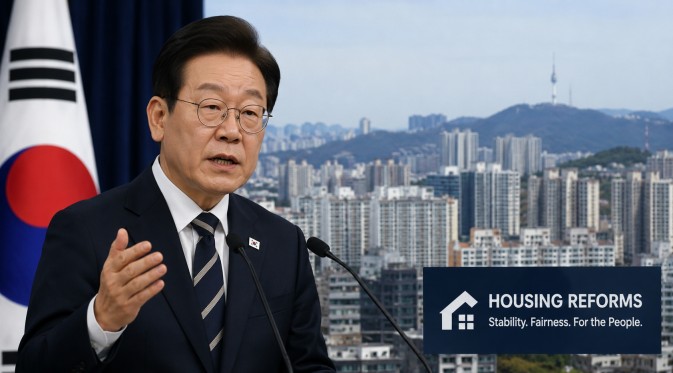
South Korean President Lee Jae Myung has committed to advancing significant housing reforms, even in the face of potential political opposition. He emphasized the urgency of addressing the country’s property market to prevent an unchecked bubble that could result in prolonged economic stagnation. During a policy forum, Lee highlighted the critical nature of these reforms, comparing the potential fallout to the economic slowdown Japan experienced after its property bubble burst.
To tackle speculation and stabilize the housing market, Lee proposed several measures, including increased property holding taxes, revised capital gains taxes, and more stringent mortgage lending rules. His approach aims to safeguard single-home owners, lower-income households, and individuals residing outside the capital region. In contrast, multiple-home owners and those possessing high-value speculative properties would face heavier tax burdens under the proposed changes.
The president also addressed the issue of rental-deposit loans, advocating for tighter controls while proposing exemptions for young people, newlyweds, and other vulnerable groups. This targeted approach is designed to alleviate the financial strain on those most in need while curbing speculative practices that inflate the market.
Lee underscored the necessity of these tough reforms, asserting that the government must be prepared to bear the political costs to ensure the nation’s long-term economic stability. With a broader real estate policy package expected to be unveiled later this month or in early August, South Korea is taking decisive steps to address its housing market challenges and avert a larger economic crisis.
