

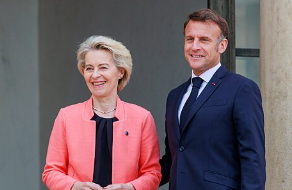
The European Union’s summit at Alden Biesen castle produced agreement on advancing “Buy European” policies targeting strategic sectors. Leaders from all 27 member states convened to develop strategies for enhancing European competitiveness in the face of American and Chinese economic challenges.
The policy shift reflects vulnerabilities revealed by the 2022 loss of Russian gas, ongoing trade wars initiated by American leadership, and China’s state-subsidized pursuit of economic dominance. These crises transformed European preference from controversial to necessary in strategic sectors requiring protection.
Von der Leyen’s March action plan encompasses regulatory simplification, EU Inc company law for startups, capital market integration, and energy cost reduction. She emphasized the enormous pressure and urgency could enable transformative change despite complex plans threatening established interests.
An Italy-Germany-Belgium coalition hosted a pre-summit gathering of 19 member states to discuss industrial relaunch initiatives. The Italian prime minister’s office reported discussions on emissions trading system review, highlighting the growing German-Italian partnership in shaping European economic policy.
Former Prime Minister Draghi’s assessment that Europe must transition from confederation to federation resonated with leaders concerned about individual member state veto power. He argued that current decision-making structures make countries “vulnerable to being picked off one by one” by more unified competitors.
