

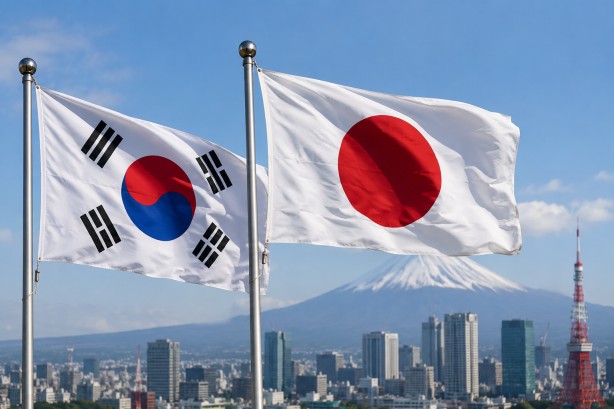
Japan’s political landscape is seeing a shift towards conservatism under Prime Minister Sanae Takaichi, which is complicating relations with South Korea and raising alarms about potential impacts on historical and territorial issues that have long been contentious. The two neighboring countries, Japan and South Korea, have maintained a “two-track” strategy, where they separate historical disagreements from areas where they need to collaborate, such as defense and economic matters. However, a recent report from South Korea’s Institute for National Security Strategy suggests that Japan’s political shift could jeopardize the fragile diplomatic progress between the nations.
Recent tensions have flared due to visits by Japanese politicians to the Yasukuni Shrine, which is seen as a symbol of Japan’s militaristic past, and Japan’s renewed assertion over the Dokdo islands, a territory governed by South Korea but claimed by Japan as Takeshima. Although Prime Minister Takaichi did not visit the shrine on the sensitive date of August 15—marking Japan’s World War II surrender—she did send a ritual offering. This gesture, coupled with visits by other senior Japanese officials, has led to formal protests from South Korea, highlighting the ongoing sensitivity of these issues.
Despite these tensions, South Korean President Lee Jae Myung has taken a more measured stance. While he acknowledges the historical grievances that remain between the two countries, he underscores the importance of continued cooperation with Japan, suggesting that the benefits of collaboration in areas like security and economy cannot be overlooked. This balanced approach aims to maintain dialogue and cooperation despite the historical backdrop.
Experts caution that if both nations do not make tangible progress on resolving these disputes, it could weaken the “two-track” approach. The ongoing controversies over historical narratives, territorial claims, and wartime issues pose a significant challenge, and without effective management, these could overshadow the practical cooperation the countries are trying to expand. The situation calls for both sides to work towards concrete solutions to maintain the delicate balance in their diplomatic relations.
