

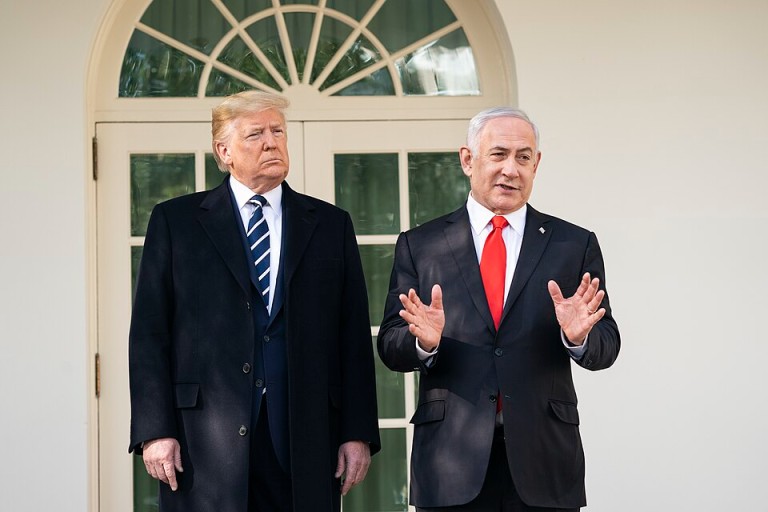
US President Donald Trump has voiced sharp criticism of Israeli Prime Minister Benjamin Netanyahu, labeling him as “a very difficult guy” in the midst of heightened tensions linked to the ongoing conflict involving Iran and Lebanon. This public rebuke comes as the United States and Iran are on the brink of signing a peace agreement aimed at resolving over three months of regional conflict. The anticipated agreement is set to include the cessation of military actions, the reopening of the Strait of Hormuz, and lifting US naval restrictions in the area.
Trump’s frustrations mainly stem from Israel’s persistent military actions in Lebanon, which he claims have complicated the peace negotiations with Iran. He pointed out that recent Israeli strikes on Beirut have delayed the announcement of the peace framework and escalated tensions at a crucial point in the talks. Despite these criticisms, Trump reiterated the importance of US support for Israel but acknowledged the growing differences between Washington and Tel Aviv regarding the management of the broader Middle East crisis.
The conflict has intensified in Lebanon after Hezbollah joined the hostilities in support of Iran, leading to months of cross-border clashes and an extensive Israeli military operation in southern Lebanon. This has resulted in significant civilian displacement and fears of a broader regional conflict. While US-Iran peace talks have shown progress, uncertainty looms over Lebanon’s involvement in the deal. Negotiators have suggested that Lebanese issues will be addressed in future discussions, though Israel has stated it will continue to make autonomous security decisions.
The peace framework is scheduled to be formally signed in Switzerland later this week. Following the signing, a 60-day negotiation period will commence, addressing unresolved matters, including Iran’s nuclear program and broader regional security issues. The agreement is under close scrutiny by global markets, as its successful implementation is seen as a potential stabilizer for the Middle East and a means to restore normal shipping operations through the Strait of Hormuz, a vital route for global energy supplies.
