

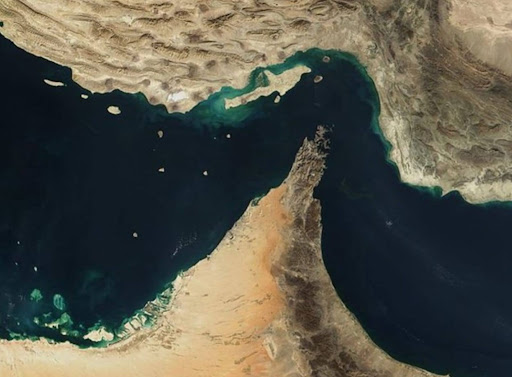
The reluctance of allied nations to commit warships to the Strait of Hormuz makes strategic sense when one examines Iran’s explicit threat to destroy any tanker heading for the US, Israel, or allied nations — a threat that extends by implication to any navy sent to escort those tankers. President Trump posted on Truth Social urging the UK, France, China, Japan, South Korea, and all oil-importing nations to send vessels to the blockaded waterway, but the response has been unanimous in its caution. No nation has committed warships to the region.
Iran sealed the strait in retaliation for US-Israeli airstrikes, producing what has been described as the largest oil supply disruption in history. One-fifth of global oil exports ordinarily flow through the passage. Tehran has made clear that tankers bound for the US, Israel, or their allies are legitimate targets and will be destroyed. Sixteen vessels have been attacked already, and Iran has raised the possibility of mining the strait — an action that would turn the narrow waterway into a hazardous maze for any naval force attempting to escort commercial traffic.
France was most explicit in its refusal. Defence Minister Catherine Vautrin said clearly that no French ships would be sent while the conflict was active. President Macron had discussed the idea of a purely defensive escort mission, but restricted any French participation to a post-escalation phase. The UK confirmed discussions were underway with allies about multiple options including mine-hunting drones. Germany’s foreign minister raised doubts about extending the EU’s Aspides mission from the Red Sea to the Hormuz area, saying the mission had not proven particularly effective even in its current limited scope.
Japan and South Korea face significant economic pressure from the disruption yet have not taken decisive action. Japan’s policy chief said naval deployment was conceivable under the law but described the threshold as very high. South Korea acknowledged the gravity of the situation and said it was exploring various avenues to protect its energy security and citizens. The economic cost of inaction is rising daily as oil prices climb globally — but the military risk of action in an active conflict zone remains a powerful deterrent for nations that have not themselves been attacked.
China presents a complex variable in the unfolding situation. Beijing is diplomatically aligned with Tehran while also depending on Gulf oil for a major share of its energy needs. China is reportedly in talks with Iran about permitting tanker passage, though no agreement has been confirmed publicly. The Chinese embassy in Washington focused on communication and de-escalation as China’s preferred instruments. US Energy Secretary Chris Wright expressed hope that China would prove a constructive partner, adding that dialogue was actively underway with various nations about restoring access to the world’s most strategically vital oil route.
