
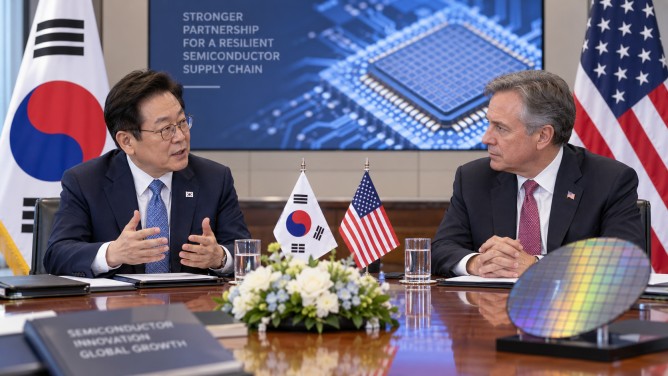
In an effort to strengthen economic and strategic ties, South Korea and the United States are actively engaging in discussions regarding semiconductor investments within U.S. borders. A South Korean official has highlighted that these talks are part of broader bilateral negotiations aimed at addressing the challenges posed by potential U.S. tariffs on semiconductor imports. Washington has signaled that companies may incur heightened costs unless they bolster their semiconductor production domestically.
An existing agreement, forged last year, has already seen South Korea pledge a substantial $350 billion towards U.S. manufacturing investments. As part of this deal, it was agreed that South Korean chipmakers would benefit from tariff rates at least as favorable as those extended to other significant semiconductor trading partners. This arrangement underlines the strategic importance of South Korea in the global semiconductor market, particularly with its industry giants, Samsung Electronics and SK Hynix, at the forefront of memory-chip manufacturing.
The demand for products from these South Korean companies has surged, driven by the rapid expansion of artificial intelligence infrastructure investments by technology firms. This increasing demand underscores the critical nature of the ongoing discussions between the two nations, as both seek to navigate the complexities of global supply chains and trade regulations in the semiconductor sector.
Beyond economic issues, the South Korean official noted that talks with Washington encompass national security topics as well. Among these is Seoul’s initiative to develop a nuclear-powered submarine, a project that has seen limited advancement in negotiations. The multifaceted nature of these discussions highlights the intertwined economic and security interests that define the partnership between South Korea and the United States.
