

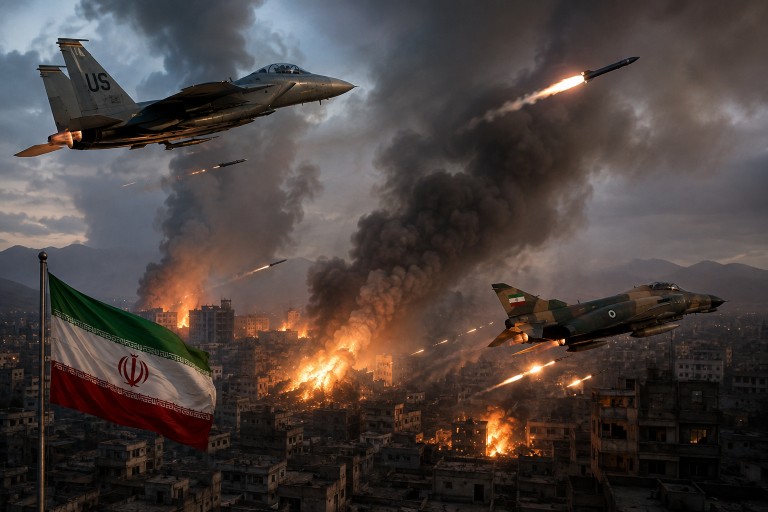
The United States and Iran have once again engaged in airstrikes against each other, causing alarm over the potential for these latest tensions to spiral into a wider conflict across the Middle East. The US military launched attacks targeting facilities associated with Iran’s Islamic Revolutionary Guard Corps (IRGC), citing these actions as a response to attempted interference with commercial shipping in the Strait of Hormuz and looming threats to American personnel.
In retaliation, Iran carried out missile and drone strikes on US interests across several regional countries, including Jordan, Bahrain, Kuwait, and Iraq. Jordan’s military reported intercepting ten ballistic missiles fired by Iran, with three additional missiles landing in uninhabited areas. There were no immediate reports of casualties or direct hits on a US military training facility.
Iran also claimed responsibility for attacks near a US base in Erbil, Iraq, while reports surfaced of missile and drone activities in Kuwait, and air-raid sirens were heard in Bahrain. This latest exchange has exacerbated concerns over the safety of the Strait of Hormuz, a key passage for global oil trade. The situation has already led to a rise in oil prices, and Iran has issued a warning that it might block Gulf oil exports if the US ramps up military or economic pressures.
In response to the US strikes, Iranian officials denounced the actions and promised to retaliate. President Masoud Pezeshkian emphasized that Tehran stands ready to respond if the US does not adhere to an earlier agreement intended to quell hostilities. As tensions escalate, both nations have issued warnings that any further aggression could provoke even stronger reprisals.
US President Donald Trump has warned of a much tougher response should Iran continue with additional attacks, while Iranian leaders have pledged to utilize both military and diplomatic channels to safeguard their interests. This renewed cycle of violence follows a period where the conflict had predominantly shifted towards sanctions and economic maneuvers rather than direct confrontations. The recent military actions raise fears that efforts to restrain the conflict might falter, potentially leading the region back into sustained military engagement.
