

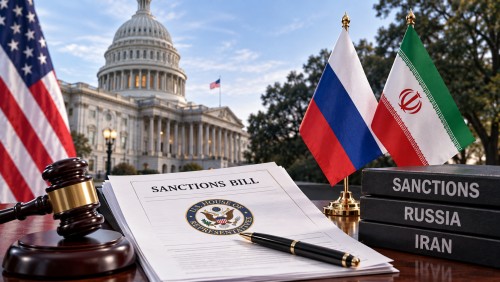
The U.S. House of Representatives has approved the Lindsey O. Graham Sanctioning Russia and Iran Act of 2026, a legislative effort to intensify economic pressure on Russia due to its involvement in the Ukraine conflict and to extend sanctions on Iran. The bill, which passed with a 262-159 vote on September 16, now awaits President Donald Trump’s signature following its earlier approval by the Senate in August.
This legislation targets a range of Russian entities, including officials, financial institutions, and energy sectors, as well as the so-called shadow fleet that aids in bypassing existing sanctions. Additionally, the bill proposes imposing tariffs of up to 100% on goods from nations that purchase Russian oil or gas or assist in evading sanctions.
Beyond Russia, the measure also seeks to extend the Iran Sanctions Act through 2031, introducing new restrictions aimed at financial and energy activities linked to Iran. These actions reflect a continued U.S. strategy to curb what it sees as destabilizing behavior by both nations.
Despite its passage, the bill drew some opposition, with certain lawmakers expressing concerns over provisions that would expand presidential authority regarding tariffs and sanctions. Nevertheless, it garnered bipartisan support in the House, underscoring a shared commitment to addressing these international issues.
