

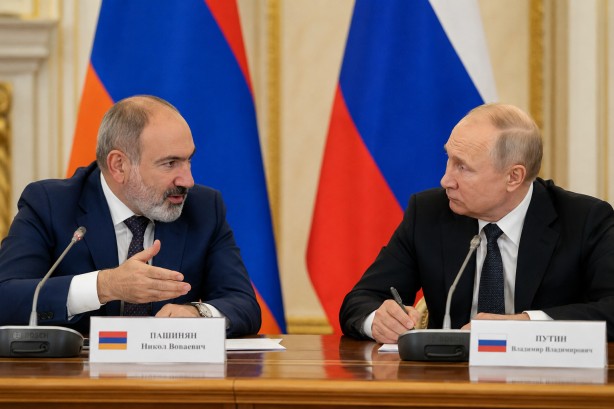
In a recent phone discussion, Armenian Prime Minister Nikol Pashinyan called on Russian President Vladimir Putin to assist in resolving trade barriers that Russia has imposed on Armenian goods. Pashinyan highlighted that these restrictions are in conflict with both bilateral agreements and the guidelines of the Eurasian Economic Union (EAEU), an alliance to which both nations belong. He expressed Armenia’s readiness to address the conflict through dialogue and urged for measures to be taken to alleviate the situation.
The trade dispute has emerged against a backdrop of growing tension between the two countries, as Armenia seeks to enhance its relationships with Western nations. Last month, Russia instituted temporary bans on a range of Armenian imports, including fruits, vegetables, flowers, fish, and alcoholic beverages. This move has added to the strain between Yerevan and Moscow, highlighting the challenges in their bilateral relations.
Complicating matters is Armenia’s shifting foreign policy focus. The country has been exploring closer ties with the European Union, a move that has not gone unnoticed by Russia. Moscow has previously cautioned that Armenia’s pursuit of EU membership might impact its standing within the EAEU. Despite these diplomatic frictions, Russia continues to be Armenia’s largest trading partner and a critical supplier of energy, underscoring the complexity of their economic ties.
The current trade restrictions are part of a broader narrative of how regional alliances and economic strategies are evolving in the face of shifting geopolitical landscapes. Both nations are grappling with the implications of Armenia’s pivot towards the West, and how it might reshape traditional alliances. As these dynamics play out, the effectiveness of diplomatic dialogue in resolving trade and policy disagreements will be put to the test.
