

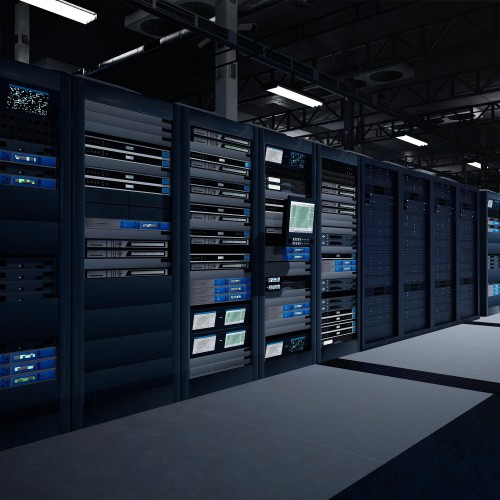
China has reclaimed its position at the pinnacle of the global supercomputer rankings with the introduction of its LineShine system. This accomplishment, achieved after several years, underscores China’s advances in developing its own computing technology. However, experts emphasize that this does not automatically signify a surpassing of the United States in artificial intelligence capabilities.
The LineShine supercomputer, housed at the National Supercomputing Centre in Shenzhen, is powered by domestically developed chips and has outperformed the previously top-ranked system from the United States. Despite this, analysts point out that traditional supercomputer rankings primarily assess machines built for scientific computing tasks, which do not encompass the full scope of performance in modern AI workloads.
It is important to note that the ranking system evaluates scientific computing capabilities, whereas many of the world’s leading AI systems, often constructed by major technology firms, are not included in these rankings. Experts indicate that cutting-edge AI computing heavily relies on specialized chips and extensive data center infrastructure, which are not fully captured by the supercomputer rankings.
China’s re-emergence at the top of the list signals its commitment to bolstering self-reliance in chip design and computing technology. Nonetheless, the country faces ongoing challenges in AI development due to restrictions on access to advanced AI chips, which are crucial for progress in this field.
The rivalry between China and the United States in advanced computing continues to intensify, as both nations allocate significant investments towards artificial intelligence, quantum technology, and next-generation computing systems. This competitive landscape highlights the strategic importance both countries place on leading in the technological frontier.
