

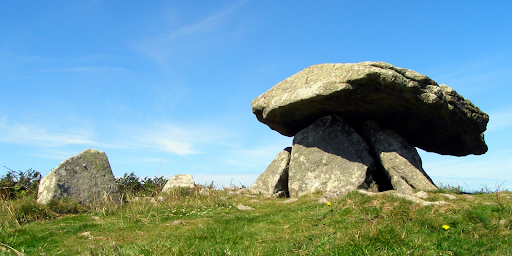
Cornwall’s winter solstice traditions stretch unbroken from prehistoric times into the present. The same landscape features that guided Neolithic astronomers—granite ridges, rocky outcrops, and distant islands—continue orienting modern celebrations. This continuity makes West Cornwall unique among Britain’s ancient landscapes, where living traditions maintain connections with monuments built four thousand years ago.
The archaeological evidence reveals sophisticated astronomical knowledge among prehistoric communities. Carolyn Kennett’s research demonstrates how the Land’s End peninsula’s geology—specifically its southwest-extending granite spine—provided natural alignment with winter solstice sunset. Ancient builders recognized and enhanced this feature, positioning monuments like Chûn Quoit and Tregeseal circle to create optimal viewing locations for solar observations.
These monuments served multiple functions. Practically, they helped agricultural communities track seasons and plan activities. Symbolically, they marked moments when cosmic order reasserted itself—when the sun reversed its southward journey and began returning north, bringing promise of eventual warmth and growth. The precision of alignments suggests specialized knowledge holders maintained and transmitted astronomical information across generations.
The Isles of Scilly’s position on the southwestern horizon added mythological dimensions. Their appearing and disappearing nature reinforced beliefs about western lands as thresholds to other realms. Winter solstice rituals may have incorporated beliefs about the dead, darkness, and renewal, with the sun’s turning point representing hope for life’s continuation through winter’s harsh conditions.
Today’s celebrations blend ancient and modern elements seamlessly. The Montol festival revives centuries-old Cornish customs including guise dancing with elaborate animal masks and foliate heads, traditional caroling, and music performed on pipe, drum, and fiddle. Fire dancers, hobby horses, and dragons parade through Penzance streets before the ceremonial Mock (Yule log) procession to the sea. These vibrant celebrations maintain Cornwall’s distinctive cultural identity while honoring the prehistoric foundations that established this landscape’s special relationship with winter’s darkest day.
