

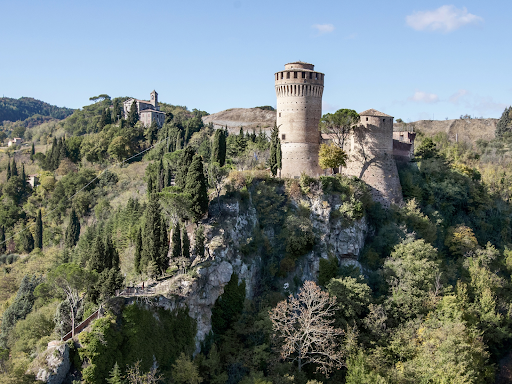
Beyond the big names, Italy is full of places that see more neighbours than tourists. Brisighella, in Emilia-Romagna, sets the tone with its craggy hills and solitary towers. Approaching the town feels like entering a fantastical painting.
Once inside, visitors find a tangle of old streets and an elevated route that threads through the historic centre, providing shady corners and vantage points. The surrounding countryside is ideal for walkers, with scenery that shifts from gentle farmland to dramatic slopes.
Down in Sicily, the Via dei Frati leads from Caltanissetta to Cefalù on a 54-mile route through the Madonie mountains. With few, if any, other hikers, each day feels like a private encounter with the landscape. Nights in villages such as Gangi are simple and satisfying.
Basilicata’s Venosa packs Roman archaeology, a castle and Jewish catacombs into its modest footprint. Close by, the castles of Melfi and Lagopesole and the palace at Pietragalla demonstrate just how overlooked this area remains. Good wine and hearty local dishes tie the experience together.
There is more: an eco-hotel deep in Apennine forests where mobile phones fall silent; Cividale’s medieval centre and Lombard-era Tempietto; Chioggia, a smaller, working version of Venice complete with canals, beaches and a zoological museum; the real mountain life of Santo Stefano d’Aveto; the vineyards and hazelnut groves around Loazzolo in Piedmont; Campoli Appennino’s bear sanctuary and sinkhole; and the Roman ruins of Urbs Salvia near Urbisaglia. Together they form an itinerary full of surprises.
