

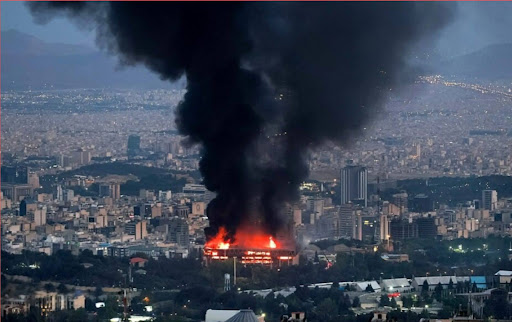
US Defence Secretary Pete Hegseth confirmed on Saturday that Mojtaba Khamenei, Iran’s newly installed supreme leader, had been wounded in an earlier Israeli strike and suggested the injuries might be disfiguring. Iranian authorities admitted Khamenei had been hurt but insisted the 56-year-old’s condition was not serious. The disclosures came as the United States pressed forward with intensive airstrikes on Iran, hitting Kharg Island and other targets in continued operations that began when the war erupted on February 28.
Hegseth also described Iran’s remaining leadership as “desperate and hiding,” claiming senior figures had gone underground to escape the bombing. Despite the targeted strikes, analysts said Iran’s governmental structure appeared largely intact, giving Tehran the institutional capacity to sustain its military campaign. The International Crisis Group’s Ali Vaez said Iran was executing a deliberate strategy of survival, continued retaliation, and conflict prolongation designed to outlast American resolve.
US warplanes bombed Kharg Island on Friday in a massive assault, and further waves of strikes continued on Saturday. President Trump said in public statements the island had been effectively destroyed and hinted further strikes were likely. Trump also appealed on social media for allied nations — including China, France, Japan, South Korea, and the UK — to send warships to the Strait of Hormuz to help reopen the passage. He was not yet ready to negotiate, he said, because Iran’s terms were unacceptable.
Iran struck back fiercely across the Gulf. Ballistic missiles hit targets in the UAE, suspending oil-loading operations at Fujairah and prompting military officials to warn civilians near ports and US installations to evacuate. Iranian commanders threatened to strike any regional energy or economic facility with ties to American companies. Iran’s foreign minister called on Arab neighbours to expel US military forces, accusing the American security umbrella of “inviting trouble rather than deterring it.”
The cost of the conflict continued to mount. More than 1,400 Iranians had been reported dead, with residents enduring relentless around-the-clock bombing. Thirteen people had died in Israel and roughly 20 across the Gulf region. The US embassy in Baghdad was struck by missiles overnight, triggering an immediate evacuation advisory for American citizens in Iraq. In Lebanon, Israeli strikes on Hezbollah had killed more than 800 people and displaced 850,000. Six US crew members died when a military aircraft crashed in western Iraq. With oil prices threatening to hit $150 per barrel, pressure was mounting on Trump to find a way out of the conflict before the global economy sustained irreversible damage.
