

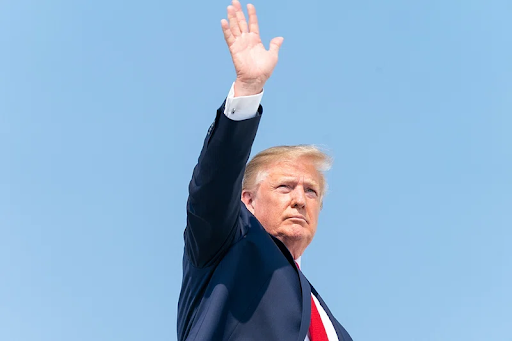
One of the more audacious dimensions of Donald Trump’s Board of Peace is not about Gaza at all — it is about global governance. Trump has explicitly framed the board as a challenger to the United Nations Security Council’s authority in resolving international conflicts, a goal that, if pursued seriously, would represent one of the most significant shifts in global diplomacy in decades.
Trump has long been a critic of the United Nations, questioning its effectiveness and the fairness of its cost-sharing arrangements. His administration’s approach to Gaza — bypassing the Security Council and assembling a parallel institution — reflects a broader strategy of working around multilateral bodies he views as ineffective or biased.
The Board of Peace, which held its first meeting Thursday in Washington, includes more than two dozen founding members. It conspicuously excludes key European allies like France, Norway, and Sweden, who have declined to join. It also excludes Palestinians themselves, despite the fact that the board is making decisions about their territory and future.
On Gaza specifically, the board faces immediate and concrete challenges. Hamas has not disarmed. International stabilization forces have not deployed. The transitional governance committee is stuck in Egypt. The UN, EU, and World Bank estimate reconstruction will cost $70 billion — far beyond the $5 billion in pledges Trump claimed this week without providing documentation.
Whether a body with such uneven membership, no formal international legal standing, and no verified funding commitments can genuinely replace or even pressure the Security Council is deeply uncertain. But Trump’s ambition is clear. The board is not just a tool for solving Gaza — it is his vision of what international conflict resolution should look like in a world where he sets the rules.
